
Canada’s AI Strategy and Missed Commercial Opportunities - Part 8
Geopolitics, US Instability, and Strategic Alliances; 2026 Limited Conclusion
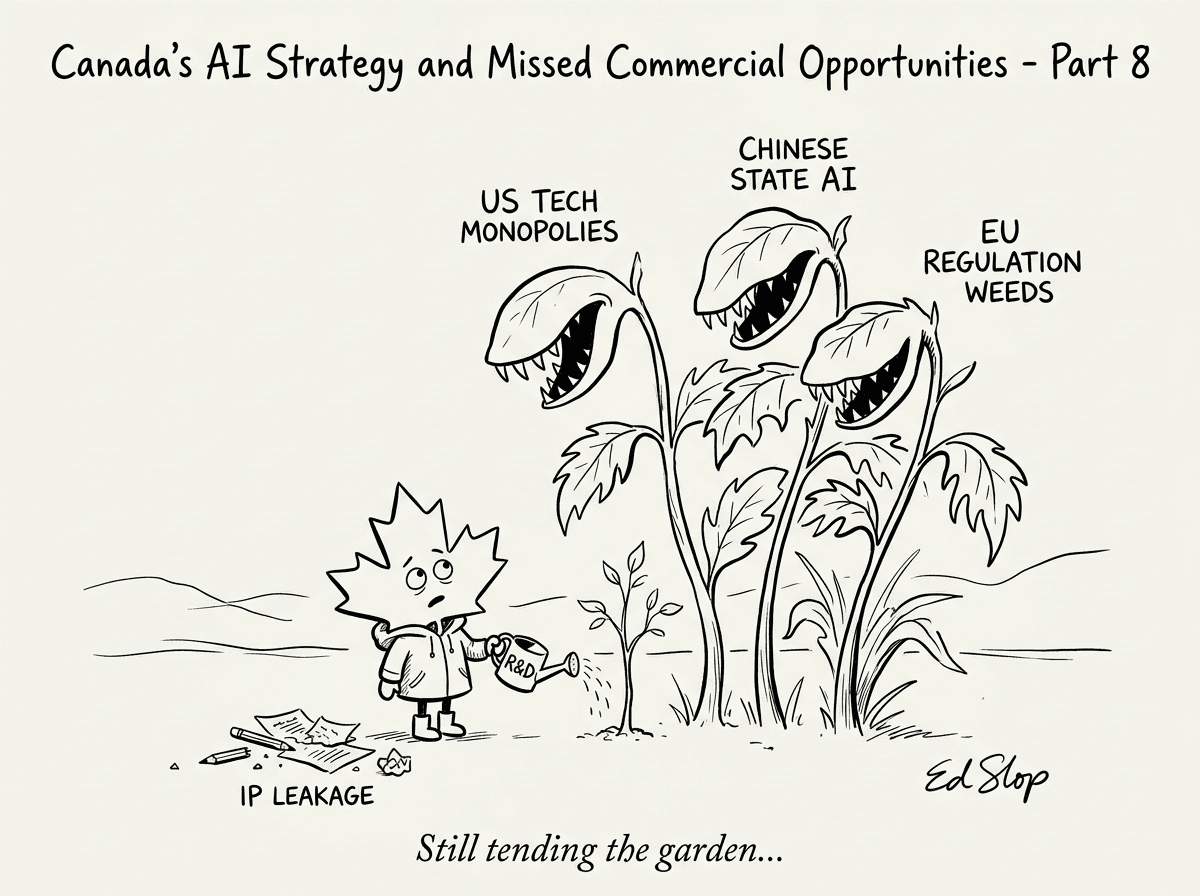
Geopolitics, US Instability, and Strategic Alliances
Shifting Power Dynamics at the UN: Remarks by UN Secretary-General António Guterres and AI researcher Yoshua Bengio, highlighting three major ongoing power transfers: (1) Shifts among nation-states (US-China technological rivalry). (2) Power transferring from sovereign governments to a handful of private tech monopolies. (3) Humans transferring decision-making power to automated machines.
Bipartisan US Protectionism: Cautions against assuming that US unpredictability is solely tied to Donald Trump. Protectionist sentiments against foreign trade and technologies (including Chinese EVs and digital products) are deeply entrenched among US Democrats as well.
Canada's Strategic Alignment with Europe: Because Canada lacks the standalone domestic market scale of the US or China, it must forge international partnerships with allies facing similar catch-up dynamics: (1) Partnering with European AI ventures (e.g., Mistral AI in France; Canadian AI scale-up Cohere engaging in partnerships in Germany). (2) Deepening cooperation through agreements like Horizon Europe across AI, quantum computing, and biotechnology.
2026 Limited Conclusion (aiTO intel unit)
Canada possesses world-class talent and foundational research, but its chronic failure to retain intellectual property, scale domestic corporations, and secure sovereign digital infrastructure leaves it vulnerable to foreign economic and technological dominance. Overcoming complacency requires coordinated industrial policy, domestic cloud/data ownership, and international alliances with partners who share common regulatory and sovereignty objectives.
* Footnotes & Citations & Sources provided only upon request to aiTO.